

What does it cost to be agile? A success story with Andrey Kondrashov
- Bonis Rebus staff

- Jan 7, 2021
- 5 min read
Updated: Apr 8, 2021
COVID-19 pandemic caused a worldwide crisis and impacted almost all businesses around the world. In times of crisis, it is essential for each organization to have well-prepared and qualified leaders who see the way forward and possess techniques on how to cope with troubles. A lot of words have already been said and written about agile strategies for businesses, skills, and qualities true leaders should have. But does everything written so far truly uncovers the background agility comes from? Sometimes, it seems that scientists just play a wording game and try to come up with better synonyms of already used terms. However, they miss the point of what does really matter for us as human beings. And this point is emotions, nerves, and pressure which each leader feels while coping with troubles on daily basis, to prevent an enterprise from sinking down and even to keep a promise of growth.
This story we would like to dedicate to a person whose business has faced 2 major crises in the last
decade and to explain by using examples from his experience what does it cost to be agile. Our hero is
Andrey Kondrashov, a founder and a managing director of IT company “SpaceIT” that is based in
Ukrainian capital city, Kyiv. Before establishing his own company, Andrey tried himself in building a successful career in a major Ukrainian IT company.
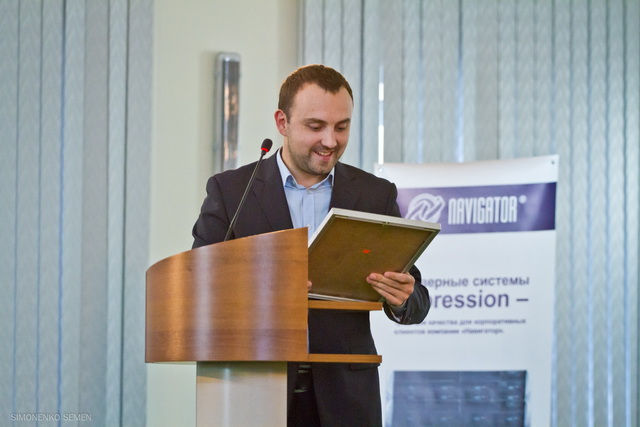
Corporate life can be interesting for young specialists who try their best to reach a senior level at the company. As I reached the position of sales director, I realized that it was a ceiling for me, and I could not grow further. On top of that, the rigid strategy of the company, and stupid bureaucracy cut my ideas and initiatives. It made me realize that it was the time to quit, and to move on.
If you would ask if Andrey had any kind of securities to quit a job, the answer is no, he did not. He did
not have any significant savings or support of rich parents . But he was full of enthusiasm and confidence that his creativity and ideas are bound to achieve success. “Freedom and limitless potential for self-

development, that what I was lacking”, says our hero. And in 2010, was born. The company represents itself as a SpaceIT LLC system integrator specialized in embedding innovative technologies in areas of telecommunication, cyber protection, local webs, etc. Since the foundation, the company has won many awards in the IT sector, and become the key player in the Ukrainian telecommunication market.
Everything had been going well until the events in winter 2014-2015 when Ukraine faced tragic moments of “Revolution of Dignity” and occupation of Ukrainian territories by Russian troops. These events caused a real disaster in all spheres of life in Ukraine. Depreciation of Ukrainian currency hit 200% rate. Especially hard the crisis has been for businesses in the IT industry since all hardware parts are supplied from abroad and valued in US dollars or Euros. “I remember when over one night, the price of contracted parts for SpaceIT increased twice. Nevertheless, to change the cost of contracted works for our clients was impossible, due to fixed contract terms and legal regulation in Ukraine”, says Andrey. That situation was crucial to show leadership qualities and to prove himself as a leader who is ready to cope with difficulties.
That time, the most important for me as the company’s director was to ensure fulfillment of all projects for our clients, even though huge losses were expected.
Andrey spent days in the office not coming home in order to keep the company on the surface. As Andrey says, agility at that moment for him was the ability to be very fast and efficient in his decisions.
I did not have time to analyze or to predict that much the market situation, nobody did. Huge changes were happening every day and not in a good way. My task was to react on them as promptly and efficiently as possible in order to ensure compliance of the company's strategy to the volatile realities back then.
Nobody will explain this in books or articles, but agility in crisis time is mostly accompanied by tough size businesses. Organizations try to keep the liquidity of operations and to cut costs as much as they can. When everything goes down, it is not possible to keep all the workplaces at the company, many job cuts happen. This was the case for SpaceIT as well. The company cut almost 70% of jobs and focused only on the main operations which were the major profit source, in order to remain on the market and reach the minimum level of liquidity.
These moments are the worst when you as a leader must make a decision to fire people who perform a good job and have already become a part of your team. These decisions are the hardest and often lead to depression, what was the case for me.
Some experts could argue that there are many ways how to be agile without cutting jobs and decreasing
operation volume, like partnerships, “Blue oceans” etc. However, it’s easier to write than to prove. “In
crisis time, the market is rigid, especially in crisis which came in 2014. No new clients, no new orders, no
partnerships, only the need to withstand”. And SpaceIT did withstand. With the first forerunners of
market recovery, the company accelerated its operations, enlarged its product and service portfolio, and
even entered new IT sectors. This helped to create new jobs and to get back the old team members.
“COVID-19 pandemic and crisis which has come along brought up many new issues for our company in
terms of transportation, new hygiene standards, and communication. But all this does not come even
close to the troubles that occurred in 2014-2015. I would say the first crisis gave us a tough, but important lesson that crisis management must be adopted in prosperity times while making additional cash reserves and ensuring a flexible structure of the company. I am proud to save all the jobs in the company we had before the pandemic. I hope our journey will go to the open sea again very soon”.

Crisis time is a time of responsibility. Each hour leaders are making decisions that decide whether or not
the company remains on the market. And these decisions are mostly unpopular among employees, which
makes them very hard to make. Therefore, leaders must be emotionally stable, and ready for huge
pressure. They must be physically durable, because of the endless days they need to spend in the office, to
keep the situation under control. And they must be confident because once you swayed by comments or
feedbacks from others, you cannot keep the course anymore. “It does not mean that leaders should not listen to people around, contrary, they should. But they must be reasonable and have the courage to admit what is viable and what is futile”, says Andrey.
My piece of advice to future leaders would be to constantly improve competence, to analyze, and to learn new market trends. Knowledge and competence are the main prerequisites to be agile. And remember, each tough decision you make must have your company as the end beneficiary
We hope this article with examples from Andrey’s personal experience gives you a brief impression about
agile leadership in crisis time from a new perspective!
Stay motivated and hungry for success!
Yours truly,
Bonis Rebus team


Comments